
Introduction
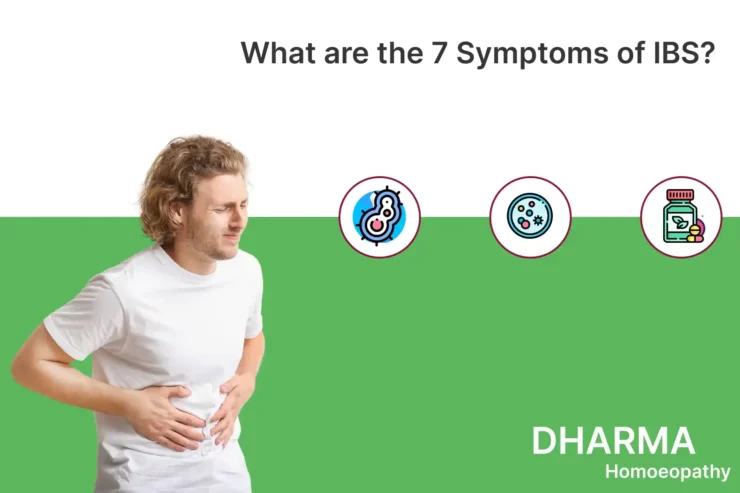
The 7 most common symptoms of IBS (irritable bowel syndrome) are:
- abdominal pain or cramping that often eases after a bowel movement
- bloating and gas
- diarrhea
- constipation
- alternating diarrhea and constipation
- mucus in the stool
- fatigue
IBS is a long-term condition in which the gut doesn’t work normally, even though scans and tests look normal. Symptoms often come and go, and they can usually be managed well once the triggers are understood.
Below, you’ll find what each symptom feels like, what causes IBS, how it’s diagnosed, and the warning signs that mean it could be something other than IBS.
Key Takeaways
- The hallmark sign is pain linked to the toilet. Tummy pain or cramping that’s related to bowel movements, often easing afterwards, is the main symptom of IBS.
- There are three main types. IBS-D (mostly diarrhea), IBS-C (mostly constipation) and IBS-M (a mix of both).
- IBS is a “functional” disorder. The gut works abnormally, but there’s no visible damage on scans, blood tests or a colonoscopy.
- Diagnosis rests on your symptom pattern. Doctors diagnose IBS from symptoms over the past 3 months, plus simple tests to rule out other conditions.
- Some signs are not typical of IBS. Blood in the stool, unexplained weight loss, symptoms that wake you at night or new symptoms after 50 need prompt medical tests.
- Triggers vary from person to person. Common ones include stress, certain foods, irregular meals and a past stomach infection.
What Is IBS?
IBS, or irritable bowel syndrome, is one of the most common digestive conditions worldwide. It affects the large intestine.
It’s called a functional gastrointestinal disorder because it changes how the gut works without causing visible damage. This is why scans, blood tests and even a colonoscopy usually come back normal.
IBS isn’t dangerous, and it doesn’t turn into bowel cancer. But it can seriously interrupt work, meals, sleep and social life if it isn’t managed.
What Are the 7 Symptoms of IBS?
1. Abdominal Pain or Cramping
Abdominal pain is the defining symptom of IBS. It often feels like cramping or a knotted stomach and is usually linked to bowel movements. Many people find it eases after going to the toilet, and it often gets worse after meals. It happens because the gut muscles contract abnormally and the gut nerves are more sensitive than usual.
2. Bloating and Gas
Bloating is the feeling that your belly is tight, swollen or overly full. It’s often worse as the day goes on or after eating, and it can come with noticeable gas or burping. It happens when food moves too slowly or too quickly through the intestines, and when the gut is extra sensitive to normal amounts of gas.
3. Diarrhea (IBS-D)
With diarrhea-predominant IBS, bowel movements are frequent, loose and often urgent, especially after eating. The fear of needing a toilet suddenly can make commuting, work and travel stressful. Frequent diarrhea can also leave you tired and dehydrated, so drink enough fluids.
4. Constipation (IBS-C)
With constipation-predominant IBS, you may struggle to pass stools or feel your bowels never empty completely. Stools can be hard, dry and painful to pass. Constipation in IBS usually comes with bloating and discomfort, not just infrequent bowel movements.
5. Alternating Diarrhea and Constipation (IBS-M)
In mixed-type IBS, bowel habits swing between diarrhea and constipation, sometimes from one day to the next. The unpredictability is often the most frustrating part, because it’s hard to plan meals and routines around it.
6. Mucus in the Stool
White or clear mucus in the stool is common in IBS and is often overlooked. On its own, it usually isn’t a sign of damage to the gut. However, mucus with blood, fever or ongoing diarrhea is not typical of IBS and should be checked by a doctor, because it can point to infection or inflammatory bowel disease.
7. Fatigue and Poor Sleep
IBS fatigue is common, even though it isn’t part of the formal definition of IBS. Night-time bloating, cramps and bathroom trips can disturb sleep. The ongoing discomfort, plus the stress of living with unpredictable symptoms, can leave you drained even after a full night’s rest. Some people also notice nausea, backache or needing to pass urine more often.
What Does IBS Poop Look Like?
Stool changes are one of the clearest signs of IBS. Doctors often use the Bristol Stool Chart, which has seven types:
- IBS-C: hard, lumpy stools (types 1–2) that are difficult to pass
- IBS-D: loose or watery stools (types 6–7), often urgent
- IBS-M: both types, on different days
- Other common signs: mucus, and a feeling that the bowels haven’t emptied fully
Black, tarry or bloody stools are not a sign of IBS. See a doctor promptly if you notice them.
IBS Symptoms in Women and Men
IBS is diagnosed more often in women. Many women notice their symptoms get worse around their period.
Men get the same symptoms: pain, bloating and changes in bowel habit. However, men are less likely to seek help, so IBS in men often goes undiagnosed for longer.
What Causes IBS?
There’s no single cause of IBS. Several factors often overlap:
1. Gut-Brain Axis Dysfunction
The gut and brain constantly send signals to each other. In IBS, these signals can become exaggerated. This leads to overactive or sluggish bowel movements and a gut that feels pain more easily.
2. Abnormal Intestinal Muscle Contractions
The intestinal muscles move food along the gut. In IBS, they may contract too strongly, causing diarrhea, or too weakly, causing constipation.
3. Food Sensitivities
Many people with IBS react to certain foods. Common culprits are dairy, wheat, caffeine, alcohol, spicy or fatty foods, and foods high in fermentable carbohydrates (FODMAPs). These can trigger bloating, pain and changes in stool.
4. Stress and Emotional Health
Stress and anxiety don’t cause IBS on their own, but they can strongly worsen symptoms and trigger flare-ups through the gut-brain connection.
5. Post-Infectious IBS
IBS sometimes starts after a bout of food poisoning or gastroenteritis. The gut can stay overly sensitive long after the infection has cleared.
Symptoms that overlap with IBS, especially bloating soon after meals, can also come from small intestinal bacterial overgrowth (SIBO). Read about the first signs of SIBO.
What Triggers IBS Flare-Ups?
Common triggers for an IBS flare-up include:
- Trigger foods, large or fatty meals, and eating too quickly
- Stress, anxiety or a busy, irregular routine
- Skipping meals or eating at irregular times
- Poor sleep
- Hormonal changes, such as around your period
- A recent stomach infection or a course of antibiotics
Keeping a simple food and symptom diary for 2–3 weeks is one of the best ways to find your own triggers.
How Is IBS Diagnosed?
There’s no single test that confirms IBS. Doctors diagnose it from your symptom pattern, using what are called the Rome IV criteria:
- Recurring abdominal pain, on average at least one day a week over the last 3 months
- The pain is linked to two or more of these:
- it’s related to bowel movements
- it comes with a change in how often you go
- it comes with a change in how your stool looks
- Symptoms first started at least 6 months ago
Tests to rule out other conditions
Your doctor may also suggest simple tests to make sure it isn’t something else:
- Blood tests to check for anaemia, coeliac disease and signs of inflammation
- A stool test (such as faecal calprotectin) to check for inflammation in the bowel
- A colonoscopy, only if you have red-flag symptoms, are over 50, or your doctor has other concerns. A colonoscopy can’t show IBS itself, but it rules out other conditions.
Could It Be IBS? A Quick Self-Check
IBS is more likely if:
- You’ve had tummy pain at least once a week for about 3 months the pain is linked to going to the toilet
- How often you go, or what your stool looks like, has changed
- You have none of the red flags below
This isn’t a diagnosis. Discuss your symptoms with a doctor.
A Trusted Homoeopathic Expert
- 8+ Years of Clinical Experience in Homoeopathy
- Treats Patients Across India & Internationally Online
- Offers Personalised Constitutional Treatment
- Specialises in Respiratory, Digestive & Chronic Conditions
- Available for Online & In-Clinic Consultations
- Prescribed Remedies Delivered to Your Doorstep

When IBS Symptoms Need Urgent Attention
These signs are not typical of IBS and need prompt medical tests:
- Blood in your stool or black, tarry stools
- Unexplained weight loss
- Symptoms that start after age 50
- Pain or diarrhea that wakes you up at night
- A family history of bowel cancer, inflammatory bowel disease or coeliac disease
- Fever, persistent vomiting or anaemia
- A lump in the abdomen
Sudden, severe pain in the lower left abdomen with fever can be a sign of diverticulitis. Read about diverticulitis symptoms and care.
Is IBS Curable? Does It Go Away?
IBS is a long-term condition that tends to come and go, but it isn’t a life sentence. Once the triggers are identified and treated, many people have long periods with few or no symptoms. How quickly and how well it settles varies from person to person. It depends on:
- how long you’ve had symptoms
- your triggers
- your stress levels
- your overall health
Diet plays a big part. Read can your diet reverse IBS?
How Homeopathic Treatment Supports People With IBS
At Dharma Homoeopathy, IBS treatment is individualised. Dr. Shubham Tiwary looks at your full picture:
- your IBS type and bowel pattern
- your pain and bloating
- your food triggers
- your stress, sleep and emotional health
Treatment is planned around that picture and reviewed as your symptoms change. Homeopathy works alongside sensible diet and lifestyle changes, and alongside any tests your doctor advises to rule out other conditions. It is not a substitute for them.
For more on digestive care, read our guide on homeopathy for gut health.
Consult Dr. Shubham Tiwary
- Head and ear: migraine, headache, vertigo, dizziness, tinnitus
- Hormonal and metabolic: diabetes, PCOS, infertility
- Skin and allergy: skin conditions, allergies, respiratory problems
- Digestive and urinary: IBS, piles, UTI, bedwetting
FAQs
Is IBS dangerous?
No. IBS doesn’t damage the bowel or lead to cancer. But it can significantly affect quality of life. Symptoms like blood in the stool, weight loss or night-time symptoms are not typical of IBS and need to be checked.
How do doctors test for IBS?
There’s no single test for IBS. Doctors diagnose it from your symptom pattern over the last 3 months and use blood and stool tests to rule out other conditions. A colonoscopy is only needed in some cases.
Can IBS be cured permanently?
IBS is long-term and tends to come and go. Many people have long symptom-free periods once their triggers are identified and treated. Results vary from person to person.
What foods should I avoid with IBS?
Common triggers are dairy, wheat, caffeine, alcohol, spicy or fatty foods and high-FODMAP foods like onion, garlic and some beans. Triggers differ between people, so a food diary helps you find yours.
Can stress trigger IBS symptoms?
Yes. Stress doesn’t cause IBS on its own, but through the gut-brain connection it can bring on flare-ups and make pain, urgency and bloating worse.
How long does homeopathy take to work for IBS?
It varies with how long you’ve had IBS, your triggers and your overall health. Your progress is reviewed at each follow-up and the treatment is adjusted as symptoms change.
Disclaimer: This information is for educational purposes and does not replace professional medical advice. Always consult your healthcare provider for personalised guidance.
Introduction
The 7 most common symptoms of IBS (irritable bowel syndrome) are:
- abdominal pain or cramping that often eases after a bowel movement
- bloating and gas
- diarrhea
- constipation
- alternating diarrhea and constipation
- mucus in the stool
- fatigue
IBS is a long-term condition in which the gut doesn’t work normally, even though scans and tests look normal. Symptoms often come and go, and they can usually be managed well once the triggers are understood.
Below, you’ll find what each symptom feels like, what causes IBS, how it’s diagnosed, and the warning signs that mean it could be something other than IBS.

1. Gut-Brain Axis Dysfunction
Your gut and brain are constantly sending signals to each other. In people with IBS, these signals can get crossed or exaggerated, leading to overactive or underactive bowel movements and heightened pain sensitivity.
2. Abnormal Intestinal Muscle Contractions
The muscles in your intestines help move food through the digestive tract. In IBS, these muscles may contract too strongly (causing diarrhea) or too weakly (leading to constipation), resulting in discomfort and irregular bowel habits.
3. Food Sensitivities or Intolerances
Many people with IBS are sensitive to certain foods like dairy, gluten, caffeine, or foods high in fermentable carbs (FODMAPs). These can trigger bloating, pain, and changes in bowel movement consistency.
4. Stress and Emotional Health
Mental health plays a big role in IBS. High levels of stress, anxiety, or depression can worsen symptoms or even trigger episodes. That’s because emotional distress can throw your gut out of balance.
5. Post-Infectious IBS
Sometimes, IBS starts after a severe stomach infection like food poisoning or gastroenteritis. The gut remains inflamed and overly sensitive long after the infection clears, creating long-term digestive issues.
What are the 7 Symptoms of IBS?
Let’s break down the 7 major symptoms of IBS, so you know exactly what to look out for and when to seek help.

1. Abdominal Pain or Cramping
The most common red flag for IBS is abdominal pain. If your stomach feels like it’s tied in knots, especially before or after meals, it could be more than just a one-off issue. Many people with IBS notice that their pain eases after a bowel movement. That’s because the gut muscles contract abnormally in IBS, leading to painful cramps.
This isn’t just about discomfort—this kind of recurring pain can interfere with meals, sleep, and even your social life. The good news? A skilled homeopathy doctor can help decode your specific symptoms and offer personalized homeopathic treatment to calm your gut naturally.
2. Bloating and Gas
Ever felt like you swallowed a balloon after a meal? That’s bloating, and it’s a hallmark of IBS. Gas and bloating happen when food moves too slowly—or too quickly—through your intestines. This causes a buildup of gas that leaves you feeling overly full or tight around the belly.
Bloating isn’t just uncomfortable. For many people with IBS, it can be embarrassing, especially when it comes with noticeable gas or burping. But here’s the thing—homeopathic treatment doesn’t just patch up the bloating. It addresses your body’s unique digestion pattern and provides long-term relief with help from a qualified homeopathy doctor.
3. Diarrhea (IBS-D)
Running to the toilet often? If you’re experiencing frequent, urgent, and loose bowel movements, you might be dealing with IBS-D, or diarrhea-predominant IBS. This version of IBS can make planning your day a nightmare. Whether you’re commuting, in class, or at work, the fear of sudden bathroom needs can take over.
It’s not just about the inconvenience. Diarrhea can also leave you dehydrated and exhausted. With homeopathic treatment, the focus is on regulating your gut naturally. A homeopathy doctor will look beyond the symptom and work on fixing the root imbalances that cause the frequent trips to the restroom.
4. Constipation (IBS-C)
At the other extreme of the IBS spectrum is constipation. If you find yourself struggling to go or feeling like your bowels are never completely emptied, you might be facing IBS-C, or constipation-predominant IBS. The stool might be hard, dry, and painful to pass.
Constipation in IBS isn’t just about frequency—it’s about the discomfort, the bloating that follows, and the sluggish feeling it brings. Unlike harsh laxatives, homeopathic treatment helps restore balance in your digestion in a gentler way. Your homeopathy doctor will suggest remedies that suit your body’s rhythm and encourage regularity without side effects.
5. Alternating Diarrhea and Constipation (IBS-M)
Sometimes, IBS doesn’t stick to one pattern. One day, it’s diarrhea; the next, it’s constipation. This unpredictable version is known as IBS-M, or mixed-type IBS. It’s like your gut can’t decide what mood it’s in—and that uncertainty can be incredibly frustrating.
Living with IBS-M means constantly adapting to your body’s changing behavior, which can feel exhausting. A holistic approach, like homeopathic treatment, focuses on calming your gut and balancing its response. A trusted homeopathy doctor will consider your triggers, stress levels, and diet to create a customized plan that helps stabilize your symptoms.
6. Mucus in the Stool
Here’s one symptom that often gets overlooked: seeing white or clear mucus in your stool. For many with IBS, this is a regular occurrence. While mucus itself isn’t harmful, its presence is a sign that your gut lining is inflamed or irritated—something that shouldn’t be ignored.
Most traditional treatments brush this off, but homeopathic treatment takes every symptom seriously. When you consult a homeopathy doctor, even something like mucus is a clue that helps tailor your treatment more effectively.
7. Fatigue and Sleep Issues
It might surprise you, but IBS doesn’t just affect your gut—it can zap your energy, too. Many people with IBS complain of constant fatigue, even if they’re getting enough rest. That’s often due to poor sleep caused by nighttime bloating, cramps, or digestive discomfort.
Over time, this sleep disturbance turns into chronic fatigue, making everything from work to workouts feel harder. But homeopathic treatment takes a more whole-body view. A good homeopathy doctor will work not just on the gut, but on your overall wellness, so you can feel rested and recharged again.
When to Talk to a Homeopathy Doctor?
If these symptoms sound familiar and keep recurring, don’t brush them off. While IBS is a functional disorder and not life-threatening, it can seriously impact your daily life. If you notice more serious signs like unexplained weight loss, bleeding, or severe pain, it’s essential to seek immediate medical attention.
But if your symptoms match the seven we just explored, a qualified homeopathic doctor can help. Homeopathic treatment doesn’t just mask the symptoms—it goes to the core of the problem, treating the body as a whole.
How Homeopathic Treatment Can Help with IBS?
Let’s be honest—most people with IBS are tired of trial-and-error treatments. That’s where homeopathic treatment shines. It doesn’t rely on generic fixes or suppressing symptoms. Instead, it offers highly personalized remedies based on your emotional and physical responses, lifestyle, food habits, and symptom patterns.
A qualified homeopathy doctor will spend time understanding your full story—not just your gut. That attention to detail means you get a treatment plan that works with your body, not against it. And because homeopathic treatment is gentle and side-effect-free, it’s safe for long-term use.
Book Your Appointment Here: https://staging.dharmahomoeo.com/book-appointment/
Conclusion
Living with IBS can feel overwhelming, especially when your symptoms are unpredictable or affect your daily life. But understanding the signs—like pain, bloating, irregular stools, and fatigue—is the first step toward relief. If you feel positive about most of these symptoms, it’s time to listen to your gut.
Instead of just managing your IBS, why not start healing it from the root? A qualified homeopathy doctor can guide you through a holistic plan that fits your unique body. With the right homeopathic treatment, your gut can finally get the peace it deserves.